
Answer
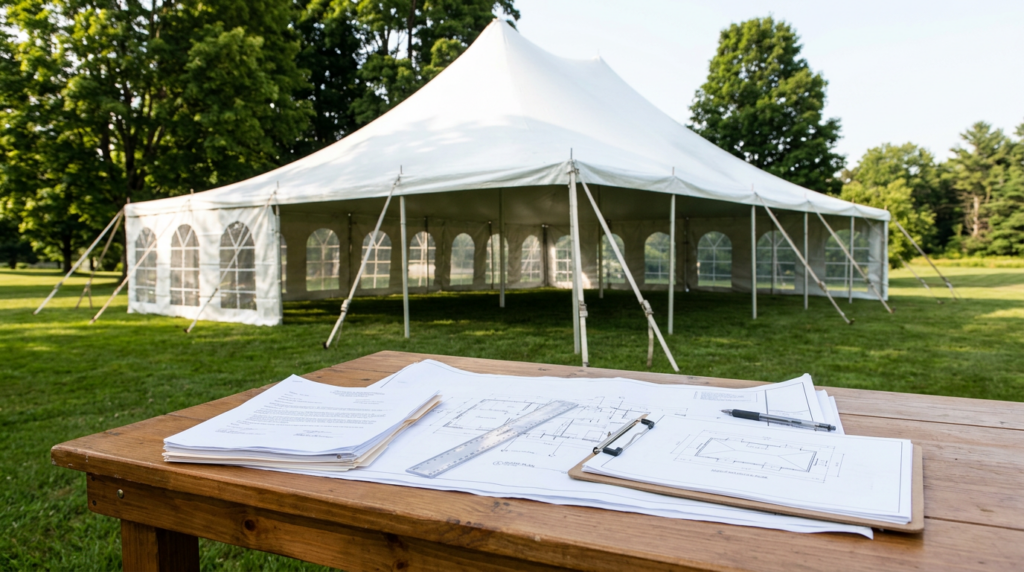
Deploying temporary structures for energy sector warehousing operations provides quick, adaptable storage solutions directly at job sites or distribution points. This approach helps maintain operational continuity by securing equipment, materials, and supplies close to where they are needed most. Superior Tent Rentals offers various structures for this purpose, including clearspan tents, which are ideal for their open interiors and quick assembly.
Overview
This guide explores various options for supporting energy sector operations with temporary structures. It details how specialized storage facilities address logistical requirements in remote or rapidly changing environments. The following sections examine key features, compare temporary and permanent solutions, and showcase practical applications.
The content also includes a labeled real-world hypothetical that illustrates the application of these solutions for a client like Alexei, demonstrating how tailored approaches address specific challenges.
- Essential Features: We review characteristics that define effective energy warehousing solutions.
- Storage Comparisons: Find out about the differences between temporary vs permanent structures.
- Real-World Example: This section shows how our solutions support energy operations on site.
- Selecting Structures: Get guidance on warehousing for energy needs.
- Efficiency Strategies: Learn about ways to streamline energy logistics with smart storage.
- Site Implementation: A look at a successful energy site warehousing case study.
Essential Features for Energy Warehousing
Effective energy sector warehousing demands specific characteristics to ensure efficient and safe operations. Adequate clearspan space, for example, allows for flexible storage configurations and easy movement of large equipment and materials. Industrial Tent Rentals often provide these necessary dimensions for temporary setups.
Proximity to operational sites also greatly reduces transportation costs and logistical complexities. Superior Tent Rentals designs solutions that integrate with existing workflows, minimizing disruption and supporting rapid deployment of essential supplies. Our experience in this region shows that accessibility and security are critical for managing inventory, from small components to heavy machinery.
| Feature | Description | Benefit to Energy Operations |
|---|---|---|
| Clearspan Design | Open interior without support poles, offering maximum usable space. | Accommodates oversized equipment and allows for flexible floor plans. |
| Durability and Climate Control | Structures built to withstand harsh weather, with options for heating, cooling, and insulation. | Protects sensitive equipment and maintains optimal conditions for stored materials, even during Industrial Energy Rental operations. |
| Rapid Deployment | Quick assembly and disassembly capabilities for temporary site needs. | Minimizes downtime and allows for swift response to changing project demands. |
| Enhanced Security | Options for controlled access, surveillance, and secure perimeters. | Safeguards valuable assets and inventory against theft or damage, a key aspect of Energy Sector Warehousing. |
Temporary vs. Permanent Energy Warehousing
Choosing between temporary and permanent structures for energy sector warehousing depends on project duration, site flexibility, and budget. Temporary structures offer adaptability for short-term or evolving operational needs, while permanent buildings provide long-term stability and security.
Permanent facilities involve significant upfront investment and can be inflexible if project scopes change or sites relocate. For operations in northern Alberta, where conditions often demand rapid adjustments, permanent builds may pose logistical challenges.
Superior Tent Rentals provides clearspan tents that adapt to diverse operational requirements. These structures can function as efficient energy sector warehousing solutions, providing protection for equipment and materials on demand. Oil Sands Tents also play a significant role in supporting site expansion.
| Feature | Temporary Warehousing (Clearspan Tents) | Permanent Warehousing (Fixed Buildings) |
|---|---|---|
| Deployment Speed | Rapid installation, often weeks or months | Months to years for construction |
| Flexibility & Scalability | Easy to expand, relocate, or reconfigure | Fixed size and location; changes are costly |
| Cost Structure | Lower upfront capital; operational expenses | High upfront capital; long-term depreciation |
| Site Requirements | Minimal foundation; adaptable to varied terrains | Extensive site preparation and foundation work |
| Duration Suitability | Short-term projects, seasonal needs, fluctuating demand | Long-term operations with stable requirements |
| Specialized Needs | Can include climate control or specialized access, often seen in modular vs traditional builds | Requires custom design for specific environmental controls |
How Our Solutions Support Energy Operations
Businesses in the energy sector often face unpredictable logistical needs, requiring flexible and rapid deployment of storage solutions. The decision to utilize temporary structures can be complex, balancing immediate operational demands with long-term cost considerations.
Alexei, a logistics manager for an energy sector company in Edmonton, Alberta, is overseeing a critical project and needs to secure a large volume of equipment and materials near the worksite. He’s evaluating whether to lease temporary structures for energy sector warehousing or to rely on existing, potentially less accessible, facilities. The urgency of the project makes quick setup paramount, but he needs to ensure the solution is cost-effective. Should Alexei opt for temporary warehousing solutions to manage his energy sector logistics in Edmonton, Alberta?
Recommendation: Superior Tent Rentals’ Temporary Structures
Superior Tent Rentals recommends their clearspan tents for energy sector warehousing needs. These structures offer a quick and adaptable storage solution that can be deployed directly at job sites, ensuring operational continuity for equipment and material security. For projects requiring immediate operational support, a clearspan tent provides efficient protection for sensitive materials.
Choosing Warehousing for Energy Needs
Selecting the correct temporary storage solution involves aligning site requirements with available options. This selection process considers factors such as project duration, inventory volume, and environmental conditions to ensure operational efficiency. We find that many energy companies in the Edmonton area benefit from a structured approach when securing temporary structures for their operations.
Matching the right structure type to specific needs prevents logistical bottlenecks and reduces overall project costs. Proper planning ensures that materials and equipment remain accessible and protected throughout their deployment. This careful consideration supports efficient resource management and helps keep projects on schedule.
- Assess Project Duration: Determine if your project requires short-term storage (under six months) or a longer-term solution. Short-term needs may favor rapid deployment options like rapid deployment shelters, while longer projects benefit from more permanent-feeling installations.
- Evaluate Inventory and Equipment: Quantify the volume, weight, and dimensions of items needing storage. This assessment helps determine the necessary clearspan width and eave height of the structure, ensuring sufficient space for movement and secure storage. For specialized equipment, consider features like reinforced flooring.
- Consider Site Conditions: Analyze ground stability, wind loads, and snow accumulation specific to the job site. Structures must withstand local weather challenges, particularly in regions with harsh winters. Factors like accessibility for large vehicles also influence placement and setup.
- Determine Security Requirements: Identify the level of security needed for stored assets. Options range from basic fencing to insulated hard-panel walls and integrated access control systems. High-value equipment may require additional measures such as internal partitions or controlled entry points.
- Factor in Environmental Control: Decide if temperature regulation or humidity control is necessary for sensitive materials. Heating, ventilation, and air conditioning (HVAC) systems can be integrated into temporary structures. This is especially relevant for materials affected by extreme cold, such as those used in Alberta oil gas operations.
- Plan for Infrastructure Integration: Consider how the warehouse will connect with existing site infrastructure, including power, lighting, and communication lines. Proper integration ensures uninterrupted workflow and safety for personnel. Superior Tent Rentals offers full-service support, from initial design to final installation, including power solutions for industrial energy rental sites.
Streamlining Energy Logistics with Smart Warehousing
Modernizing operations with smart warehousing practices enhances efficiency and accuracy for energy companies. These methods improve inventory control and reduce operational downtime, which translates directly to project timelines. This approach helps manage the complex supply chains associated with energy sector warehousing, whether for remote sites or urban distribution points.
Adopting smart solutions can significantly cut down on manual errors and speed up processing times for critical components. Superior Tent Rentals supports these goals by providing temporary storage structures that integrate with various smart inventory systems. We recommend solutions that offer clear visibility into stock levels and movement, reducing delays in Edmonton and across Alberta.
| Smart Warehousing Feature | Benefit for Energy Logistics |
|---|---|
| Automated Inventory Tracking | Real-time visibility into stock levels prevents shortages and overstocking of equipment and materials. This also helps with temporary tent structures and equipment deployment. |
| Predictive Analytics | Forecasts demand for parts and supplies, allowing for proactive stocking and optimized delivery schedules. |
| Sensor-Based Monitoring | Maintains optimal environmental conditions for sensitive equipment and monitors structural integrity of storage facilities. |
| Optimized Layout & Flow | Reduces time spent locating and retrieving items, improving overall site productivity. This helps accelerate rapid deployment shelters for project needs. |
Case Study: Successful Energy Site Warehousing
Rapid deployment of support infrastructure is common in Alberta’s energy industry. One project faced challenges with on-site material storage during an expansion in northern Alberta. This project required a secure and weather-protected space for specialized equipment and parts near the active work area.
The solution involved installing a 60-foot by 100-foot clearspan tent as temporary storage. This structure offered a wide, unobstructed interior, allowing for efficient movement of large components and shelving for smaller items. The quick setup minimized disruption to ongoing operations, providing immediate relief for storage needs.
Superior Tent Rentals observed that for many operations here, particularly those in remote locations, access to reliable, temporary infrastructure like this is critical for maintaining project timelines. This approach provides flexibility that permanent buildings cannot match, especially when site conditions or project scopes change rapidly.
| Best for Job | Option |
|---|---|
| Short-term project storage | Temporary Tent Structures |
| Long-duration site operations | Industrial Tent Rentals |
| Rapid response needs | Rapid Deployment Shelters |
| Equipment protection from harsh weather | Oil Field Tent enclosures |
| On-site workshops | Clearspan tents with custom flooring |
FAQ
Here are some of the most common questions we receive regarding energy sector warehousing, providing further insight into how these solutions can benefit your operations.
| Question | Answer |
|---|---|
| What are the main benefits of using temporary structures for energy sector warehousing in Edmonton? | Temporary structures offer rapid deployment, providing adaptable storage solutions directly at job sites or distribution points. This approach helps maintain operational continuity by securing equipment and materials close to where they are needed. Superior Tent Rentals provides clearspan tents for this purpose, ideal for their open interiors and quick assembly. |
| How does temporary warehousing compare to permanent buildings for energy sector needs? | Temporary structures offer adaptability for short-term or evolving operational needs, with lower upfront capital costs and minimal site requirements. Permanent buildings involve significant upfront investment, have fixed locations, and require extensive site preparation. For operations in northern Alberta demanding rapid adjustments, temporary builds are often more practical. |
| When should Alexei, a logistics manager in Edmonton, opt for temporary warehousing solutions for his energy sector project? | Alexei should opt for temporary warehousing if his project requires immediate operational support and quick setup for securing a large volume of equipment and materials near the worksite. Temporary structures like clearspan tents offer efficient protection and can be deployed rapidly, supporting urgent logistical demands. |
| What factors should be considered when selecting a temporary storage solution for energy needs in Alberta? | Key factors include assessing project duration, evaluating the volume and type of inventory, considering site conditions like ground stability and weather, and determining specific security and environmental control requirements. Matching the right structure type to these needs prevents logistical bottlenecks and reduces overall project costs. |