Alberta Infrastructure: Modular vs Traditional
Choosing the right infrastructure solution is paramount for the success of energy projects in Alberta, with modular and traditional approaches offering distinct advantages. Understanding the core differences between these methods is the first step in ensuring project efficiency, adaptability, and cost-effectiveness in this dynamic sector.
The energy industry in Alberta constantly seeks innovative ways to optimize operations and respond to evolving demands. Both modular and traditional infrastructure play vital roles, but their application and benefits vary significantly depending on project scope, timeline, and environmental considerations. Our team is dedicated to providing insights that help businesses navigate these complex decisions, including options for scaling your infrastructure with clearspan technology.
This guide delves into the specifics of modular versus traditional infrastructure, offering a clear comparison to assist energy companies in Northern Alberta. We aim to equip you with the knowledge needed to select the most suitable temporary infrastructure for your critical projects, ensuring operational continuity and success. For event-specific needs, consider exploring our guide to Edmonton tent rentals for more.
Modular vs. Traditional Infrastructure: Key Differences
When considering temporary structures for energy projects, understanding the nuances of different tent types is crucial. For instance, clearspan tent rentals offer a versatile solution without internal poles, allowing for maximum usable space, which is often essential for industrial applications.
When considering infrastructure for energy projects, understanding the nuances between modular and traditional setups is crucial. For a deeper dive into how temporary structures can benefit industrial operations, explore our insights on industrial energy rental solutions for more.
The distinction between modular and traditional infrastructure lies fundamentally in their construction methodology, speed of deployment, and flexibility. Traditional methods involve on-site assembly from raw materials, a process that can be time-consuming and subject to weather delays. In contrast, modular infrastructure is largely prefabricated off-site in controlled factory conditions, then transported and assembled on location, offering significant advantages for projects with tight deadlines.
To better illustrate these differences, consider the following comparative table. It highlights how factors like cost, speed, flexibility, and long-term suitability can vary between the two approaches. This comparison is crucial for energy companies operating in Alberta, where project timelines and operational efficiency are critical success factors. For a deeper dive into rapid deployment solutions, explore our insights on temporary structures for oil sands site expansion for more.
| Feature | Modular Infrastructure | Traditional Infrastructure |
|---|---|---|
| Construction Speed | Rapid, due to off-site prefabrication | Slower, reliant on on-site assembly |
| Cost Efficiency | Often more cost-effective due to reduced labor and streamlined processes | Can be more expensive due to longer on-site labor and potential delays |
| Flexibility & Adaptability | Highly adaptable; modules can be added, removed, or reconfigured | Less flexible; modifications can be complex and costly |
| Site Disruption | Minimized on-site disruption | Higher potential for site disruption and noise |
| Quality Control | Consistent quality due to factory-controlled environment | Quality can be more variable depending on site conditions and labor |
| Long-Term Suitability | Excellent for temporary or evolving needs | Often preferred for permanent structures, but can be adapted |
For businesses seeking robust and adaptable solutions, exploring options like temporary structures can provide immediate benefits. Understanding these differences is key when planning any large-scale deployment, especially within the demanding environment of Alberta’s energy sector, as detailed in our guide on choosing temporary infrastructure for Alberta energy projects for more.
Advantages of Modular Infrastructure for Energy Projects
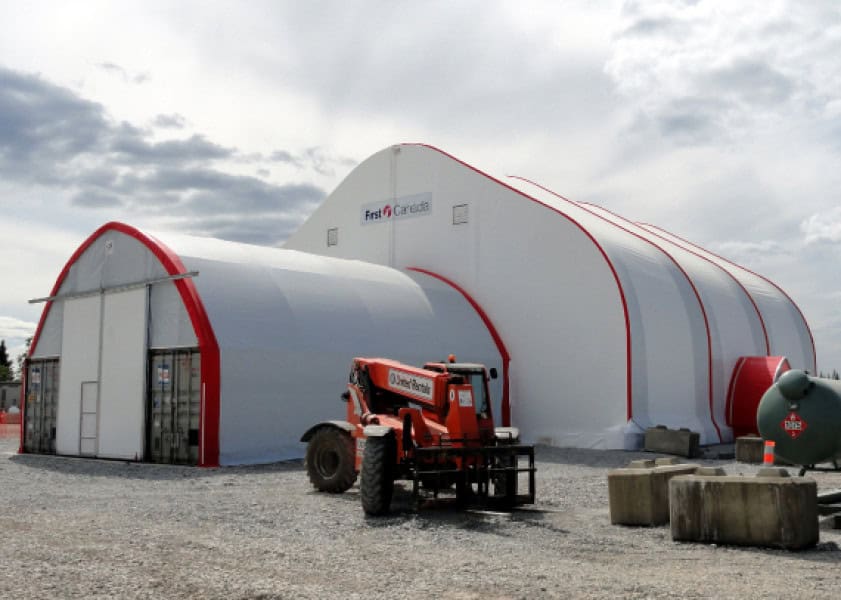
Modular infrastructure offers significant advantages for energy projects, including rapid deployment and scalability, which are crucial for projects with tight timelines and evolving needs. For instance, oil and gas field shelters can be quickly set up to provide essential operational support.
Modular infrastructure presents a compelling set of advantages for energy projects, particularly in regions like Northern Alberta where efficiency and rapid deployment are paramount. Its inherent design allows for faster setup times, which can significantly reduce overall project timelines and associated costs, leading to quicker operational readiness.
Rapid Deployment and Reduced Downtime
The prefabrication of modular components off-site means that much of the construction work occurs simultaneously with site preparation. This parallel processing dramatically shortens the overall project duration, minimizing the time energy operations might be offline or delayed. This speed is critical in the fast-paced energy industry, where every day of downtime translates to substantial financial losses, making efficient planning, much like choosing the right tent size for Alberta weather, essential.
Cost-Effectiveness and Predictability
By standardizing manufacturing processes and minimizing on-site labor, modular construction often leads to more predictable costs and significant savings. Factory-controlled environments reduce waste and minimize the risk of unforeseen expenses that can plague traditional on-site builds. This cost predictability is invaluable for project budgeting and financial planning, a key concern for any energy venture, much like planning for an outdoor occasion using a guide to event rentals.
Enhanced Flexibility and Scalability
Modular solutions offer unparalleled adaptability, allowing energy companies to easily scale operations up or down based on demand. This flexibility is crucial for managing fluctuating market conditions and project requirements, ensuring that infrastructure can be adjusted without major disruption. For scalable solutions in the energy sector, consider exploring our industrial site tent rentals for more.
A significant benefit of modular infrastructure is its inherent flexibility. Units can be easily added, removed, or reconfigured as project needs evolve. This scalability is crucial for the dynamic nature of energy exploration and extraction, allowing companies to adapt their facilities quickly without the extensive disruption associated with traditional construction. Companies can leverage these adaptable solutions through services like temporary structures, and learn more about scaling industrial operations in our guide to oil field tent rentals for more.
When Traditional Infrastructure Might Be Preferred
While modular infrastructure offers numerous benefits, traditional construction methods still hold a valuable place in certain project scenarios. Understanding when these established approaches might be more suitable can prevent misapplication of resources and ensure the best outcome for a given requirement.
- Highly Unique Site Conditions: For sites with extremely irregular topography, limited access for large modular components, or unique environmental constraints, traditional on-site construction might offer more adaptability. Skilled crews can work with the existing conditions more readily than pre-built modules.
- Very Short-Term, Non-Complex Needs: If a project requires a very basic structure for an extremely short duration, and the complexity does not warrant the logistics of modular transport and assembly, traditional methods might be simpler and quicker to implement for the immediate need.
- Permanent or Long-Term Structures with Extensive Customization: While modular systems can be long-lasting, traditional construction often provides more inherent options for deep, permanent customization and integration with existing permanent facilities. For structures intended to be part of a permanent campus, traditional methods may be more straightforward.
- Availability of Local Resources and Expertise: In some cases, the established availability of local traditional construction trades and materials may make that approach more logistically feasible and cost-effective than bringing in modular components and specialized crews, which is why understanding modular vs. tents for oil & gas sites is important.
For any project, consulting with experts can clarify which method best suits the specific demands. Our team at Superior Tent Rentals is experienced in providing solutions that meet diverse needs, whether through our extensive range of temporary structures or by advising on the best approach for your Alberta energy projects.
Factors for Northern Alberta Project Choices
Northern Alberta presents a unique set of challenges and considerations for any infrastructure project, significantly influencing the choice between modular and traditional solutions. The harsh climate, remote locations, and specific logistical hurdles demand careful planning and a robust approach to deployment.
Environmental factors such as extreme cold, heavy snowfall, and permafrost require infrastructure that can withstand rigorous conditions. Modular construction, with its factory-controlled quality, can offer superior performance in these environments. Furthermore, the logistical complexities of transporting materials and equipment to remote sites in Northern Alberta often favor the pre-assembled nature of modular units. This approach minimizes the amount of on-site work required, reducing exposure to the elements and logistical challenges. Companies often explore temporary infrastructure to address these regional demands efficiently.
Ultimately, the decision must align with the specific operational needs of the energy project. Whether it’s for drilling sites, processing facilities, or administrative support, understanding the advantages of temporary structures in this region is crucial for success. Our about us page details our commitment to serving Alberta’s industrial needs.
Case Studies: Successful Infrastructure Deployments
Examining real-world applications provides invaluable insight into the practical success of both modular and traditional infrastructure solutions within Alberta’s demanding energy sector. These examples illustrate how different approaches have been effectively implemented to meet specific project objectives and overcome unique challenges, such as those detailed in our discussion of strategic temporary infrastructure for Northern Alberta’s energy sector.
Modular Camps for Remote Exploration Sites
In numerous remote exploration sites across Alberta, modular camp facilities have proven to be indispensable. These projects often involve rapidly establishing living quarters, mess halls, and operational offices in areas with limited existing infrastructure. The ability to quickly transport and assemble prefabricated modules has significantly reduced setup times, allowing exploration teams to commence work sooner and operate more efficiently. This adaptability ensures that personnel are well-housed and supported, even in the most challenging locations, demonstrating the efficacy of solutions like temporary structures, similar to how you might choose the perfect tent for an event, as detailed in our guide to tent rentals in Alberta.
Temporary Processing Units for Midstream Projects
For midstream energy projects requiring temporary processing or storage facilities, modular units have offered a flexible and cost-effective solution. Instead of building permanent structures that may only be needed for the project’s lifespan, modular units can be deployed, configured to specific process requirements, and then decommissioned or relocated. This approach minimizes capital expenditure and environmental impact, aligning with the industry’s growing focus on sustainability and resource optimization. Understanding the full scope of options, as discussed in choosing temporary infrastructure for Alberta energy projects, is key. For industrial applications, exploring large tent rentals for industrial sites can provide scalable solutions, driving efficiency and ROI in industrial energy operations.
The Role of Tents and Clearspan Structures
Temporary structures, particularly tents and clearspan buildings, play a crucial and often underestimated role within the broader landscape of infrastructure solutions for Alberta’s energy sector. They offer immediate, adaptable spaces that can serve a multitude of purposes, from worker accommodations and command centers to temporary storage and event venues during project phases.
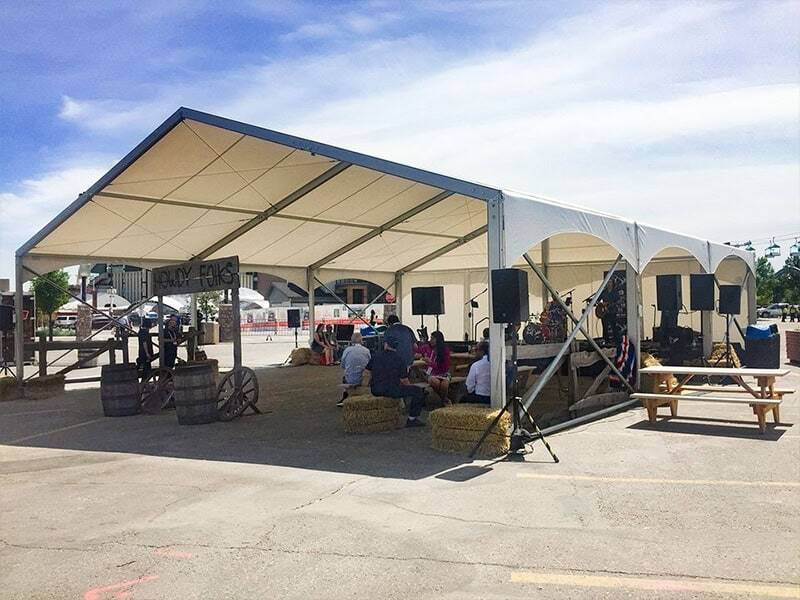
Clearspan structures offer unparalleled versatility, providing large, unobstructed spaces adaptable to a wide range of industrial and energy project needs in diverse Alberta environments.
These structures are inherently modular in their deployment, allowing for rapid setup and takedown with minimal site disturbance. They can be erected to provide immediate shelter and functional workspaces, bridging the gap during the construction of more permanent facilities or serving as the sole infrastructure solution for shorter-term projects. Their adaptability makes them ideal for the ever-changing demands of the energy industry, providing critical support wherever and whenever needed. Companies can explore the extensive options available through large tent rentals for industrial sites to meet these dynamic requirements.
The choice between modular, traditional, or temporary structures like tents and clearspan buildings depends heavily on project specifics. For further insights into how these solutions integrate within Alberta’s energy sector, refer to our guide on Alberta’s energy sector and temporary infrastructure, and learn about the benefits of oil field tent rentals and full-service installation.
Making the Right Infrastructure Choice
Selecting the appropriate infrastructure solution—whether modular, traditional, or a combination—is a critical decision for the success of any energy project in Alberta. It requires a thorough assessment of project timelines, budget constraints, site conditions, and long-term operational goals. Consulting with experienced providers is essential to navigate these choices effectively.
By carefully weighing the advantages of rapid deployment and flexibility offered by modular systems against the deep customization potential of traditional builds, project managers can identify the most suitable path forward. For immediate, adaptable needs, exploring temporary structures is also a prudent step. Our team is dedicated to providing tailored solutions and expert advice to ensure your project’s infrastructure meets its unique demands.
We encourage you to reach out to us to discuss your specific project requirements. Our expertise in providing reliable infrastructure solutions across Alberta ensures that you receive the best possible support, whether through our comprehensive range of services or through guiding you toward the optimal approach. For instance, understanding the resilience of structures in challenging environments, such as exploring high-wind certified tents for coastal oil and gas projects, can be crucial. You can learn more about our commitment and capabilities by visiting our about us page or by contacting us directly through our contact us page.
Frequently Asked Questions
This section addresses common inquiries regarding infrastructure choices for Alberta’s energy projects, providing quick answers to help clarify key considerations for modular versus traditional approaches. For specific applications in the oil sands, consider using temporary structures for oil sands site expansion for more.
| Question | Answer |
|---|---|
| What are the primary benefits of modular infrastructure for energy projects? | Modular infrastructure offers rapid deployment, cost-effectiveness due to off-site prefabrication, enhanced flexibility, and minimized site disruption compared to traditional methods. |
| When might traditional infrastructure be a better choice than modular? | Traditional infrastructure may be preferred for highly unique site conditions that are difficult to accommodate with pre-built modules, very short-term and simple needs, or when extensive, permanent customization is required. |
| How do tents and clearspan structures fit into infrastructure planning? | Tents and clearspan structures serve as highly adaptable temporary solutions, offering quick setup for various needs like command centers, accommodations, or storage, often complementing modular or traditional builds. |
| Are modular solutions suitable for the harsh Northern Alberta climate? | Yes, modular solutions can be very suitable as their factory-controlled construction ensures consistent quality and durability, which is advantageous for withstanding harsh climates. |
| What is the typical cost difference between modular and traditional infrastructure? | Modular infrastructure is often more cost-effective due to reduced on-site labor, streamlined processes, and less waste, leading to more predictable project costs. |